

Crawl Space Mold Remediation
- Home
- Mold Remediation
- Crawl Space Mold Remediation
Structural Mold Remediation
Contents Mold Remediation
Attic Mold Remediation
HVAC Mold Remediation
Basement Mold Remediation
Crawl Space Mold Remediation
Bathroom Mold Remediation
Inspection & Testing
Basement Waterproofing
Floods & Mold
Healthy Air Starts Under the Floor
Up to half of the air on the first floor of a house can come up from the crawl space below. When that crawl space is damp, with bare soil, sagging insulation and dark spots on the joists, the musty smell and spores make their way into your living room and bedrooms.
Crawl space mold is very common at the Jersey Shore, where high water tables, sandy soil and salt air keep crawl spaces humid most of the year. We clean the framing, remove wet insulation and debris, and then recommend the right moisture control, from a simple vapor barrier to full encapsulation.
Air from below
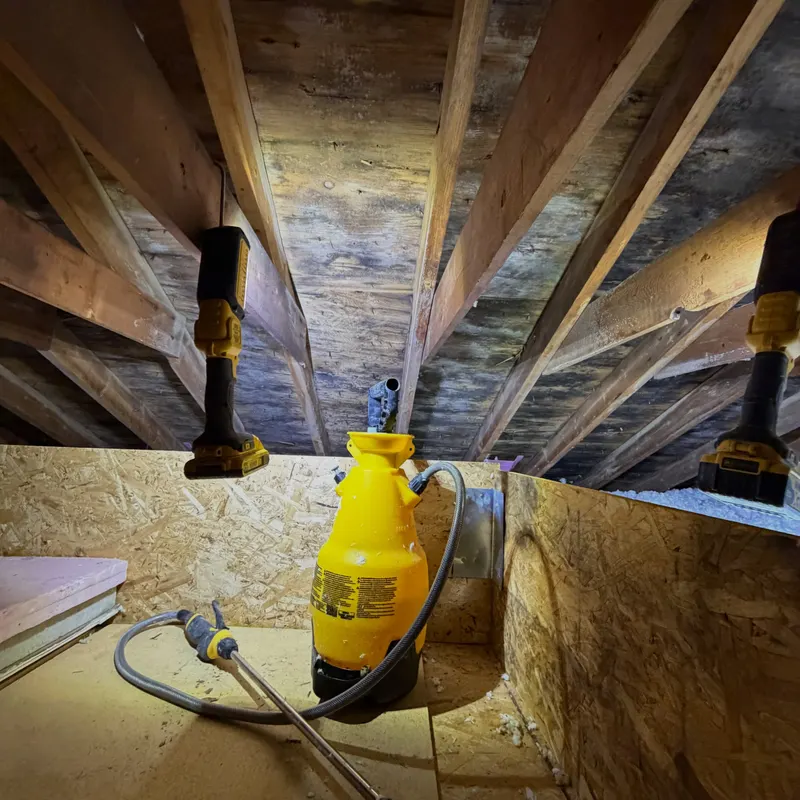
The Stack Effect Pulls Crawl Space Air Upstairs
Warm air rises and leaves through the upper floors, pulling replacement air up from the crawl space. That is why a moldy crawl space so often causes a musty first floor even when the rooms themselves look clean.
What Our Crawl Space Mold Remediation Includes
Debris & Insulation Removal
Wet fiberglass, old vapor barrier and construction debris are bagged and removed from the crawl space.
Joist & Subfloor Cleaning
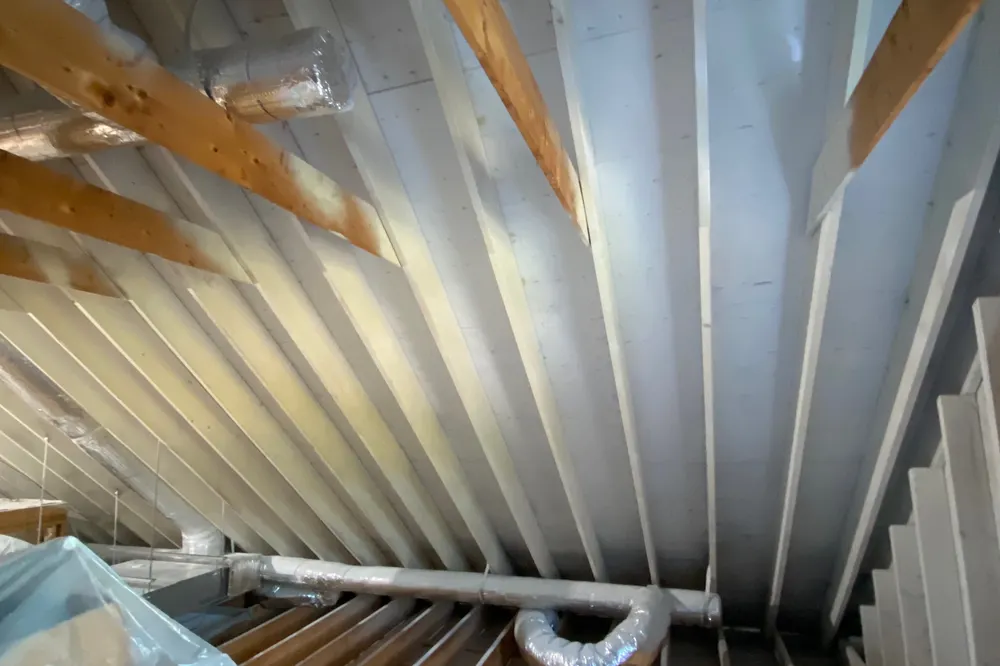
Framing is sanded or blasted, HEPA vacuumed and treated to remove active growth.
Encapsulant Coating
Clean wood is sealed with a mold-resistant coating for long-term protection.
Vapor Barrier
A heavy polyethylene barrier over the soil stops ground moisture from evaporating into the crawl space.
Full Encapsulation
Sealed vents, wall liners and a dehumidifier turn the crawl space into a dry, conditioned area.
Drainage & Sump
For crawl spaces that flood, we add interior drainage and a sump pump as part of encapsulation.
Signs of Crawl Space Mold
- Musty odors on the first floor, especially in summer
- Insulation falling down between the floor joists
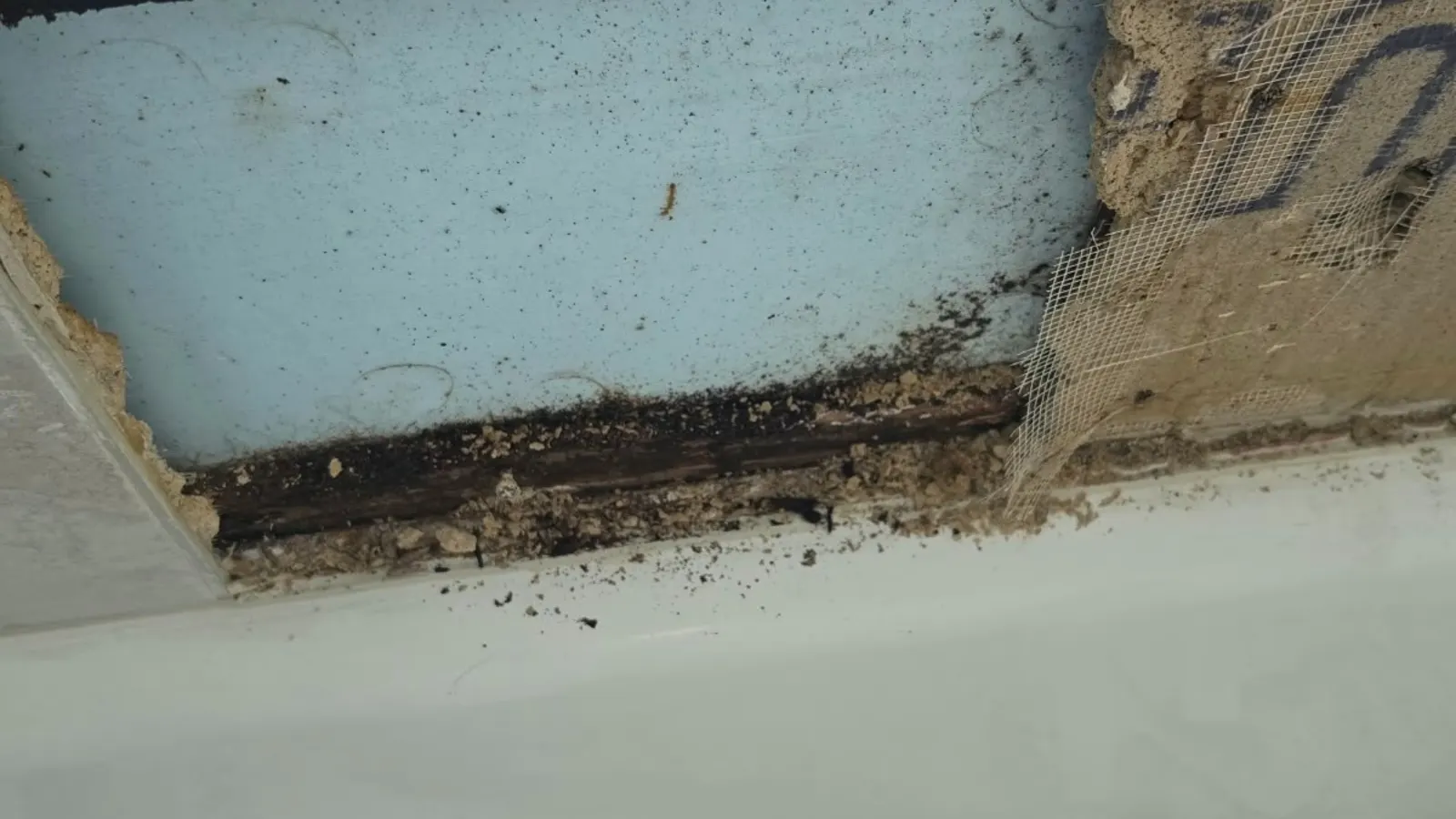
- White, gray or black growth on joists, beams or the underside of the subfloor
- Standing water or wet soil in the crawl space after rain
- Soft or bouncy floors above the crawl space
Why Open Vents Don't Solve the Problem
Older New Jersey building practice relied on foundation vents to dry the crawl space. In humid summer weather those vents actually let in warm, wet air that condenses on cooler joists and ductwork. Building science research has shown that sealed, conditioned crawl spaces stay much drier. When it fits your home and budget, we recommend closing the vents and encapsulating after remediation.
Working in Tight Spaces
Our technicians work in crawl spaces as low as 18 inches. We use portable HEPA equipment, protect the access path through your home and leave the crawl space cleaner than we found it, with photos of every area so you can see the results without crawling under there yourself.
Crawl Space Mold Remediation is one part of our complete mold remediation in NJ. Homeowners with this problem often also ask us about basement mold removal, attic mold removal, basement waterproofing. See every town we cover on our service area page.
Crawl Space Mold Remediation Cost in NJ
Crawl space mold remediation costs $1,500 to $5,000 for most New Jersey homes. Full encapsulation is a separate, larger investment that stops the moisture long term.
Joist and subfloor treatment
HEPA cleaning, antimicrobial, sealant on wood
Debris and insulation removal
Remove wet fiberglass batts and old plastic
Vapor barrier (basic)
Heavy poly on the ground, seams taped
Full encapsulation
Walls and floor sealed, vents closed, drained barrier
Crawl space dehumidifier
Installed with condensate drain
Typical 2026 price ranges for Monmouth, Ocean, Middlesex & Mercer County. Pricing assumes normal access. Crawl spaces under 24 inches high may add labor time. Your exact price is set in a written, line-item estimate after the free inspection.
Crawl Space Mold Remediation FAQ
Helpful Crawl Space Mold Remediation Guides
Musty Floors? Check the Crawl Space.
We will inspect the crawl space, photograph what we find and explain your options from cleaning to full encapsulation.
Recent Crawl Space Mold Remediation Work
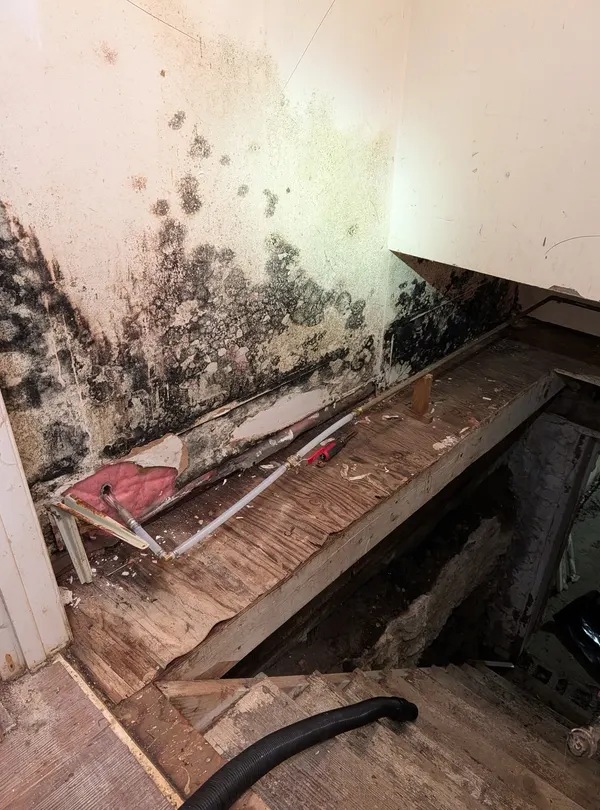
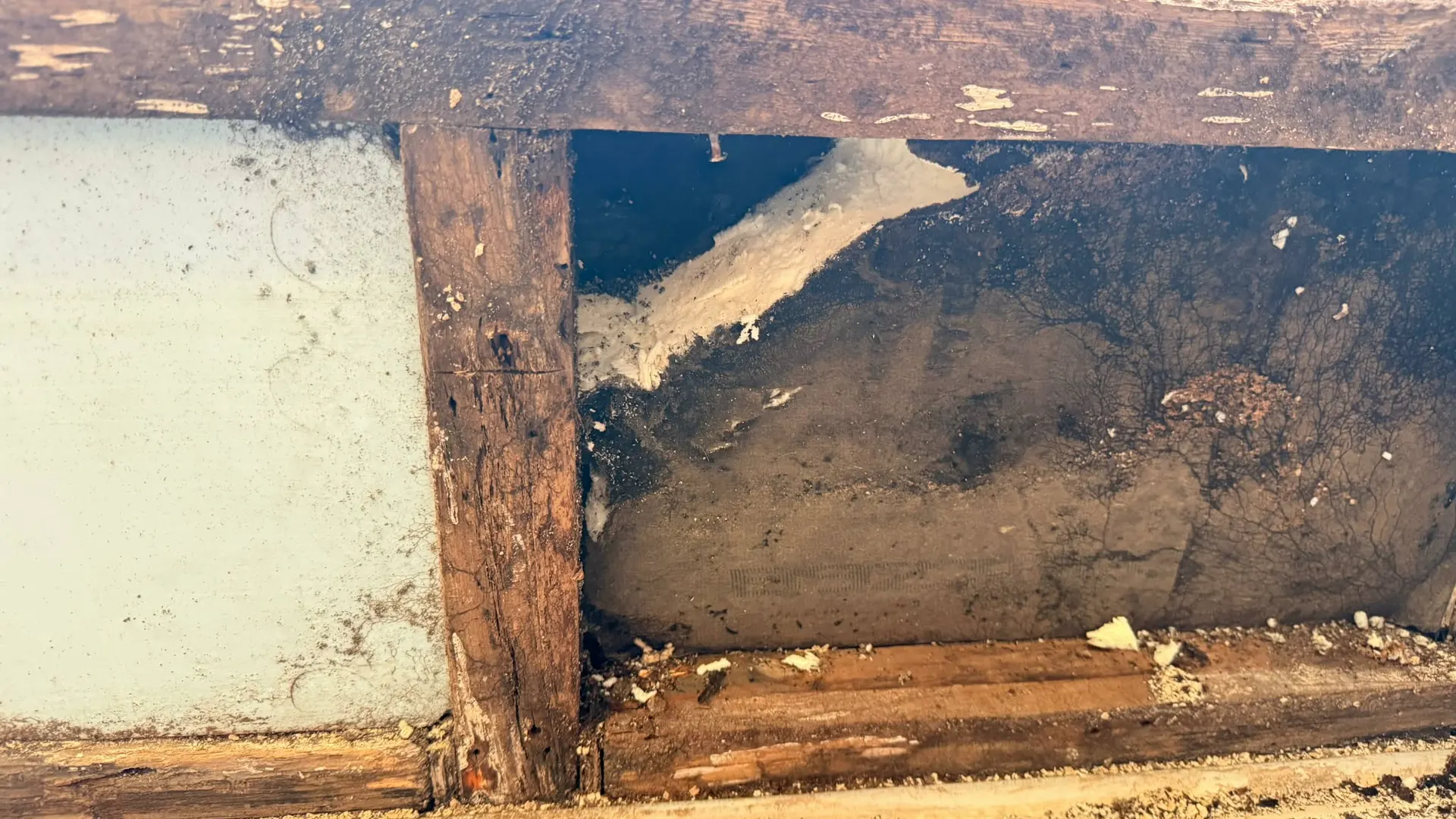
Closet Wall & Crawl Space Access Remediation
Heavy growth in a closet above a damp crawl space was removed, along with rotted subfloor and wet insulation.
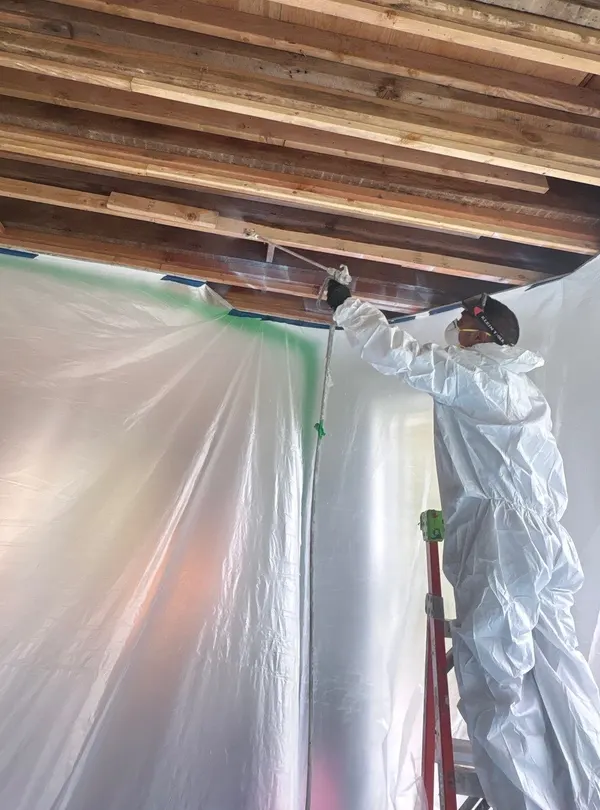
Basement Ceiling Joist Remediation
Mold on basement ceiling joists and subfloor was removed after a drop ceiling hid years of humidity damage.
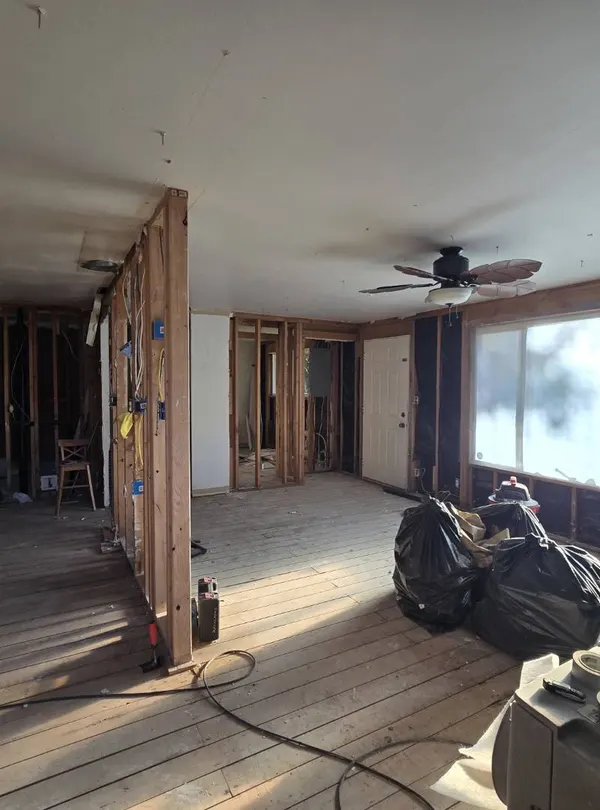
Post-Flood Whole-Floor Gut & Mold Remediation
Storm flooding left mold behind every wall of a ranch home. We stripped the floor to the studs, cleaned the framing and dried the structure.